Tickets to Feyenoord 2026/27
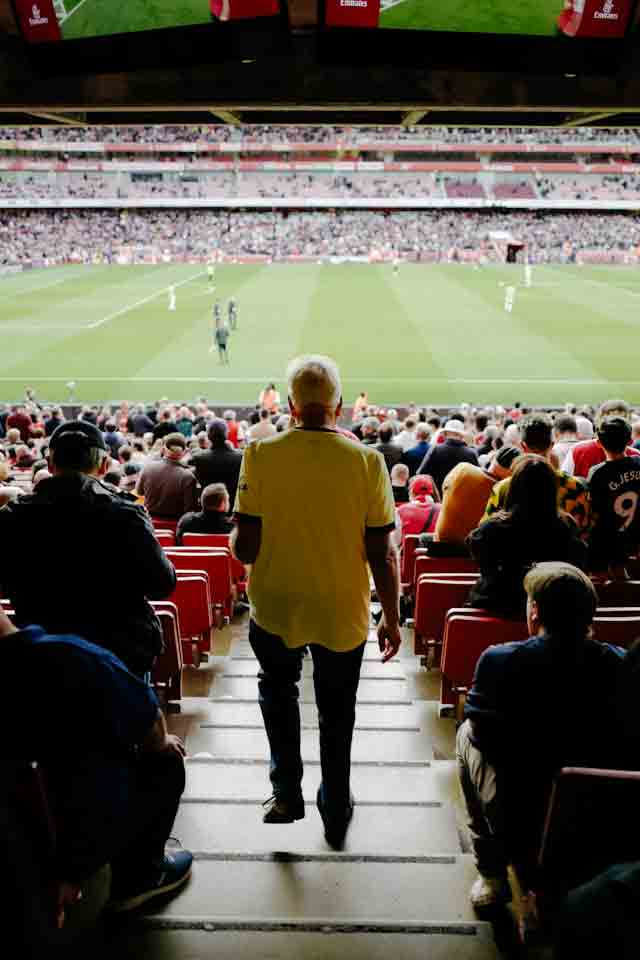
Feyenoord's fanbase is built on a working-class Rotterdam identity that goes back over a century. Home matches are loud from the first whistle, with coordinated chanting, flares on big European nights, and a crowd that treats every fixture as something worth showing up for. The 1970 European Cup win still carries weight here it is part of the club's DNA, not just a historical footnote. This page covers how to access tickets for the 2026/27 season as an international fan, what match packages typically include, and which sellers are listed on this site.
Where to buy Feyenoord tickets
Feyenoord's official platform prioritises members and registered supporters, which makes direct purchase difficult for fans based outside the Netherlands, particularly for high-category fixtures. The partners listed on this site offer a practical alternative: they handle the full booking process, including ticket sourcing and digital delivery, without requiring club membership. When choosing a seller, look for a clear refund policy, a stated delivery format, and contactable customer support. For European nights and De Klassieker, it is wise to start the process as soon as fixtures are confirmed, since the general sale window for those matches tends to be short.
Sections and price levels
Feyenoord tickets are priced across several categories depending on the match type and seat location within the ground. Eredivisie home fixtures against mid-table opponents sit at the lower end of the pricing scale, while clashes with PSV Eindhoven, Ajax, and European opponents carry a higher category. Match tickets for De Klassieker are the most expensive on the home calendar. Packages that bundle accommodation with a match ticket reflect the category of the fixture, so a European group stage game will typically cost more than a standard league night. Checking the category of your chosen fixture before purchasing gives you the clearest sense of what to expect.
Match packages with accommodation
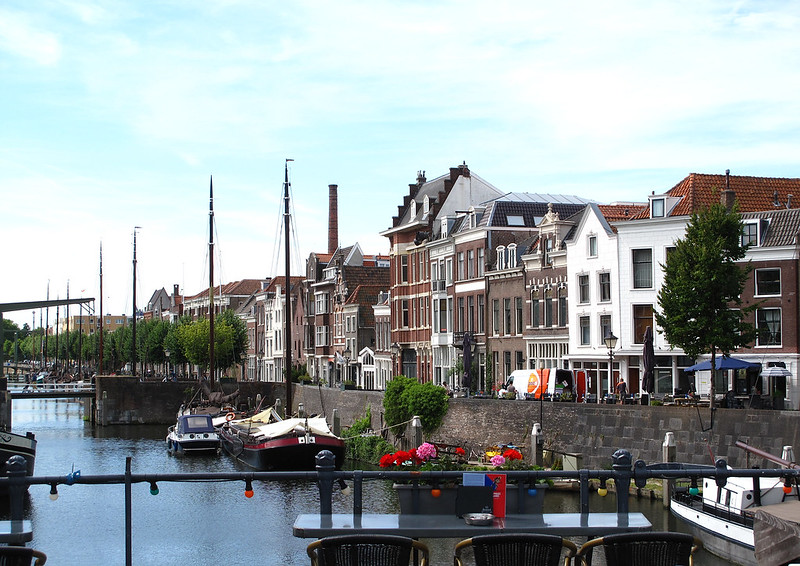
A match package for a Feyenoord fixture typically combines a match ticket with hotel accommodation in Rotterdam for one or two nights. Some packages also include transfers from Rotterdam Centraal or the airport, and occasionally a pre-match city experience. For fans travelling from abroad who prefer a single booking rather than arranging each element separately, a package is a straightforward option. European fixtures and De Klassieker are the most popular dates for package bookings. Rotterdam is a compact city with a good range of hotels close to major transport links, so most packages place you within easy reach of the ground on match day.
Feijenoord Stadion, Rotterdam
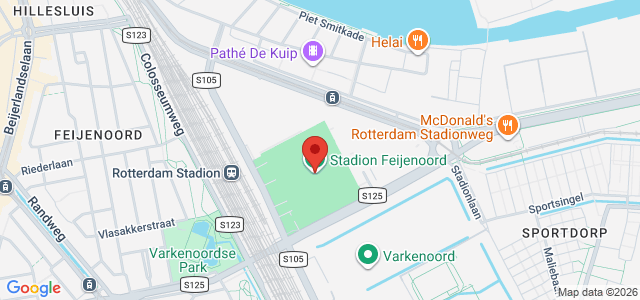
De Kuip, formally Feijenoord Stadion, sits in the south of Rotterdam and has a capacity of around 51,000. It has hosted a European Cup final and remains among the largest club grounds in the Netherlands. Tram line 23 from Rotterdam Centraal runs directly to the stadium in around 15 minutes. Buses also serve the area, with routes clearly signposted for visiting fans on match days. Driving is possible but parking close to the ground is limited.