Tickets to Roma 2026/27
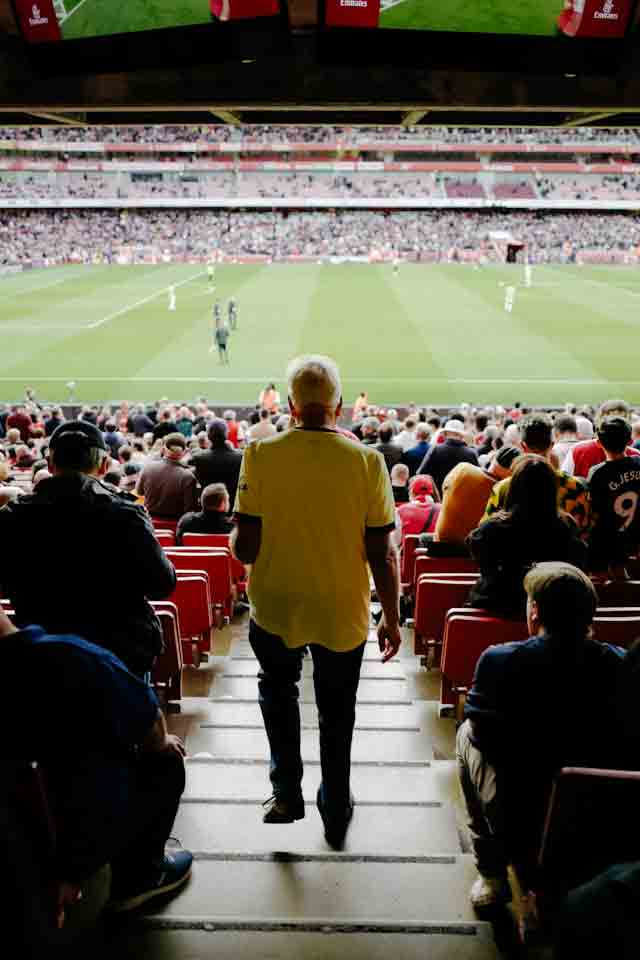
Street vendors, scarves, flags, and supporters filling the bars along Viale delle Milizie give the area a charged, almost carnival energy before kick-off. The Curva Sud, Roma's most vocal supporter section, sets the tone inside long before the referee's whistle, with choreographed displays and chants that run from the first minute to the last. For visiting fans, the contrast between the grandeur of Rome as a city and the raw intensity of a Serie A night makes the trip genuinely hard to replicate anywhere else in European football.
Where to buy Roma tickets
The main routes to a ticket are through the club's official channels, through authorised resellers, or via match packages that bundle a ticket with hotel accommodation in Rome. Official purchase is often limited to registered members for the most sought-after fixtures. Authorised resellers and travel agencies cover the gap for fans outside Italy, offering confirmed tickets through legitimate channels without requiring club membership. Before buying, check what the refund policy covers if a match is postponed, confirm the ticket format, and verify whether ID matching the ticket holder's name is required at entry. Booking early is wise for derby fixtures and top-six Serie A home games.
Sections and price levels
Roma tickets are grouped into three broad price bands, typically labelled A, B, and C, with Category A covering the highest-profile fixtures and commanding the highest face values. The Derby della Capitale sits firmly in Category A, as do home matches against Juventus, Inter Milan, and the other major Serie A clubs. Category B covers mid-table opponents, and Category C applies to lower-profile home league games where a ticket is generally easier to secure closer to match day. For European competition fixtures, pricing follows a separate structure set by UEFA rather than the club's own tier system.
Match packages with accommodation
A Roma match package typically combines a match ticket with two or three nights of hotel accommodation in Rome. Some partners listed here include airport transfers or a city tour alongside the ticket, while others offer the accommodation and match ticket as a straightforward pair. Rome has no shortage of centrally located hotels within easy reach of the main transport routes to the stadium, which makes piecing together a broader city trip alongside the match very practical. Reading what each package includes before booking is worth the time, because extras like meals or guided visits to Roma's historic sites are sometimes optional add-ons rather than standard inclusions.
Stadio Olimpico, Rome
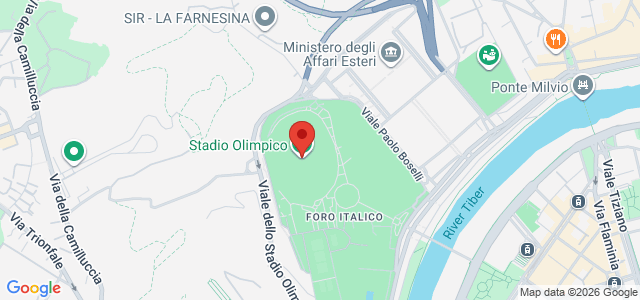
The Stadio Olimpico sits within the Foro Italico sports complex on the northern bank of the Tiber, around five kilometres from Rome's historic centre. The ground holds approximately 70,000 spectators and is shared by Roma and Lazio. Tram line 2 from Piazzale Flaminio is the most direct public transport link, with the journey taking around 20 to 30 minutes. Several bus routes also serve the area. On match days, allow extra travel time, particularly for evening kick-offs when services carry heavier loads.